

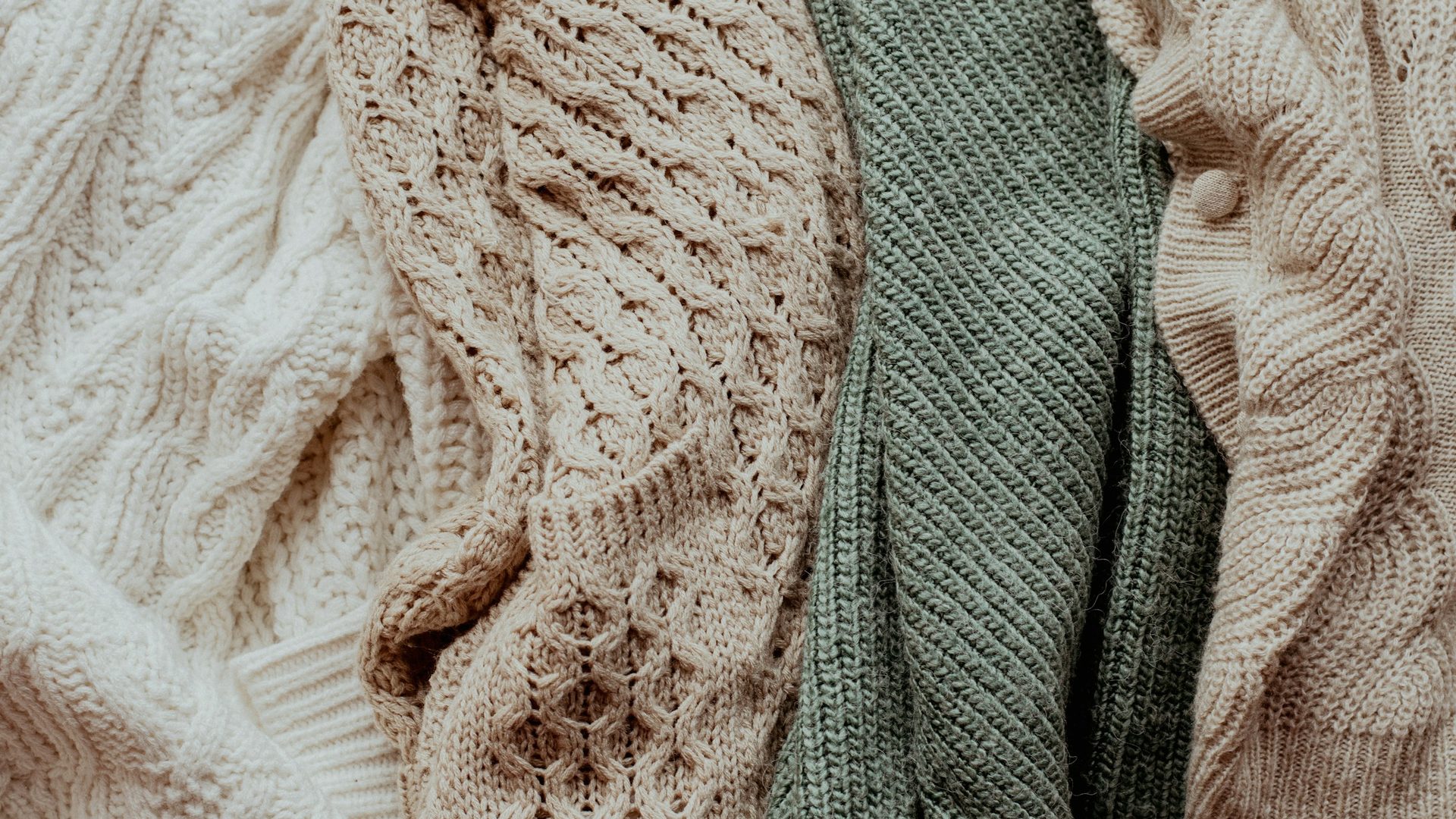
Natural fibre clothing is back at the centre of how people choose what to wear. That is the finding of new Ipsos research commissioned by Woolmark, the Australian organisation that promotes and certifies wool, presented on 22 October 2026: across five markets, Italy included, a clear majority of respondents say they prefer fibres of natural origin to synthetic ones when price, style and fit are the same.
It is a figure worth noting, but also worth reading carefully: whoever commissioned the study has a direct interest in the result, and a preference stated in a survey is not yet a purchase. That said, the signal is consistent with a change you can also see in shops and wardrobes.
What the research measured
The survey was carried out online, with 300 respondents in each market (China, France, Germany, Italy and the United States), aged 18 to 65. Data were collected on 7 and 8 September 2026. The percentages below are averages across the five markets:
- 82%: prefer natural fibres to synthetic ones, when price, style and fit are equal;
- 65%: prefer Merino wool to polyester, and Merino came out ahead in each of the five markets;
- 67%: say they would pay more for garments made mainly from natural fibres;
- 71%: consider independent certification or verification of fibre content and quality important.
Woolmark adds a piece of context: according to the organisation, worldwide Google search interest in “Merino wool” has more than doubled over the past five years.
Why natural fibre clothing wins people over
The research does not break down the reasons for the preference, but Woolmark's announcement points the way: people want to know what a garment is made of, what that means in everyday use and whether the claims on the label can be trusted. The 71% figure on certification should be read in exactly that light: it is not enough for a fabric to be presented as natural, people want proof.
Image professionals have seen this for a long time, for less technical reasons too. A well-chosen natural fibre garment hangs differently, breathes and ages more gracefully. A wool jacket that keeps its shape after a day of meetings conveys order and care without a word; a synthetic sweater that pills after a few weeks says the opposite.
Price, quality and the wardrobe
The 67% willing to spend more suggests that, for many, the price tag is not the only yardstick. It is worth thinking in terms of cost per wear: a garment worn a hundred times costs less, proportionally, than one that ends up at the back of the wardrobe after ten washes.
This does not mean every synthetic should be avoided. Some technical fibres have a clear role, for example in sportswear or waterproof garments, and many quality fabrics are blends. The point is to know what you are buying and why.
In a professional setting the difference is even more noticeable. A natural fibre suit or coat in the right cut lasts for several seasons and makes it possible to build a smaller but more versatile wardrobe: fewer pieces, easier combinations, a presence that is recognisable and consistent over time.
How to read a label before you buy
A few simple habits help you choose more consciously:
- read the composition: fibres are listed with their percentage, and the first is the main one;
- touch the fabric and look at it in the light: an even weave, a full hand, no artificial sheen;
- check for independent certification marks, where they exist;
- ask yourself which pieces already in your wardrobe it will go with, even before the price.
A choice that speaks for the person making it
Natural fibre clothing is not just a matter of materials: it is a form of consistency. Choosing a few well-made pieces that last and that represent us is the starting point of a wardrobe built with method rather than accumulated on impulse.
In CG Imagine's C(h)IC® Journey, reading fabrics is part of building the wardrobe: together with colour and silhouette analysis, it helps you understand which pieces truly deserve the extra investment in natural fibres that 82% of respondents say they prefer when all else is equal.
Sources
- Woolmark, “New research reveals growing consumer preference for natural fibres as Woolmark launches Return to Real”, press release, Sydney, 22 October 2026
- Ipsos for AWI (Australian Wool Innovation), “Natural Fibre Perception Report”, online interviews with 300 people per market in China, France, Germany, Italy and the United States, 7–8 September 2026
Photo by Ruta Gudeliene on Unsplash