
During training sessions and work meetings I'm often asked how to choose the right colours, and my answer is always the same: they don't exist.
As an Image and Communication Consultant, I explain that many factors affect the choice of colours, and for this reason I can't give a quick answer without exploring the subject with each individual.
To create a palette or show clients the colours that flatter them, it's important to carry out an analysis in several steps.
Precisely because it's not about giving a label but about offering a service of openness and awareness towards one's own image, the client will be involved and active throughout the process.
Coaching
The first step is essential: getting to know each other, and yourself.
The first questionnaire phase lets me understand the tastes, expectations and habits of the person in front of me, and lets the client reflect on themselves.
We often dress according to the context or the people around us and, for lack of time, tend to wear the same clothes all the time.
Pausing on our relationship with colours and on personal wishes is important to determine part of the colours in the ideal palette.
Colour analysis
The second step is to analyse the flattering colours of the person's colour mix.
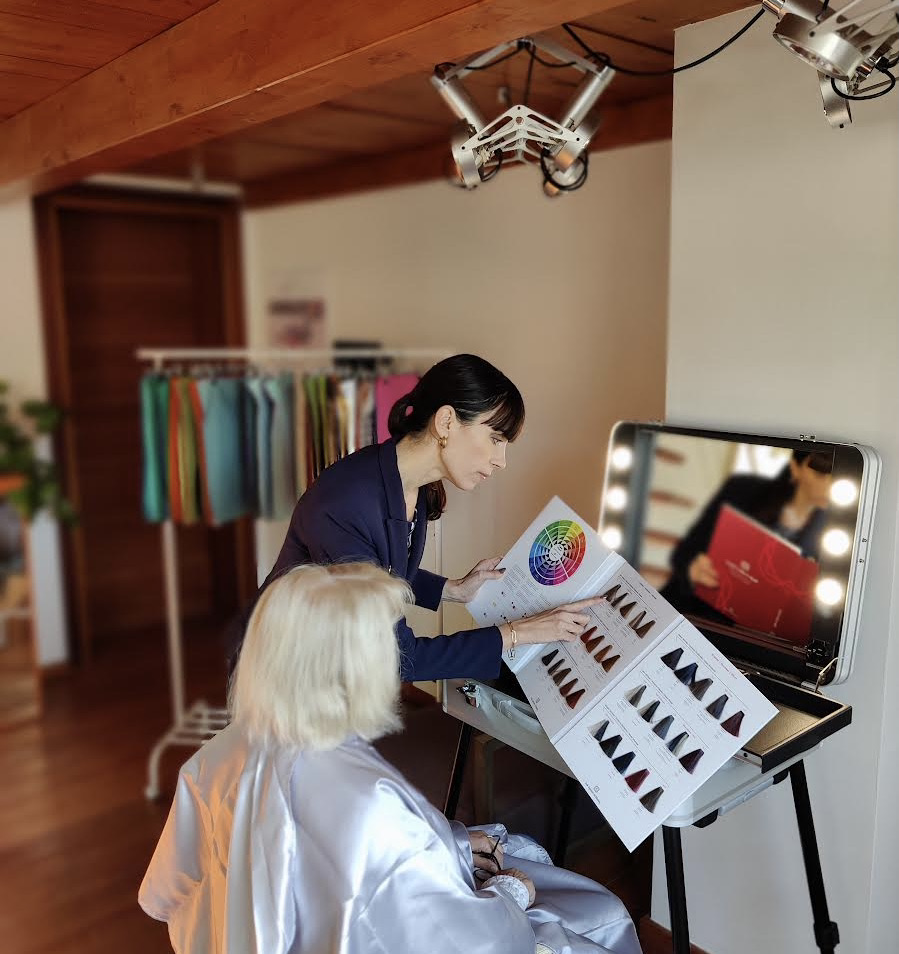
Through a first phase of observation and a second phase of testing with coloured drapes, it's possible to identify the colours that, placed next to a person's face, make it look more relaxed, rested and enhanced.
Personally I use ESR Personal Color Analysis, a method accredited by the international association of image consultants, which is not only very effective but extremely precise: passing the beautiful drapes under the client's face leaves no doubt about their season or the most flattering colours.
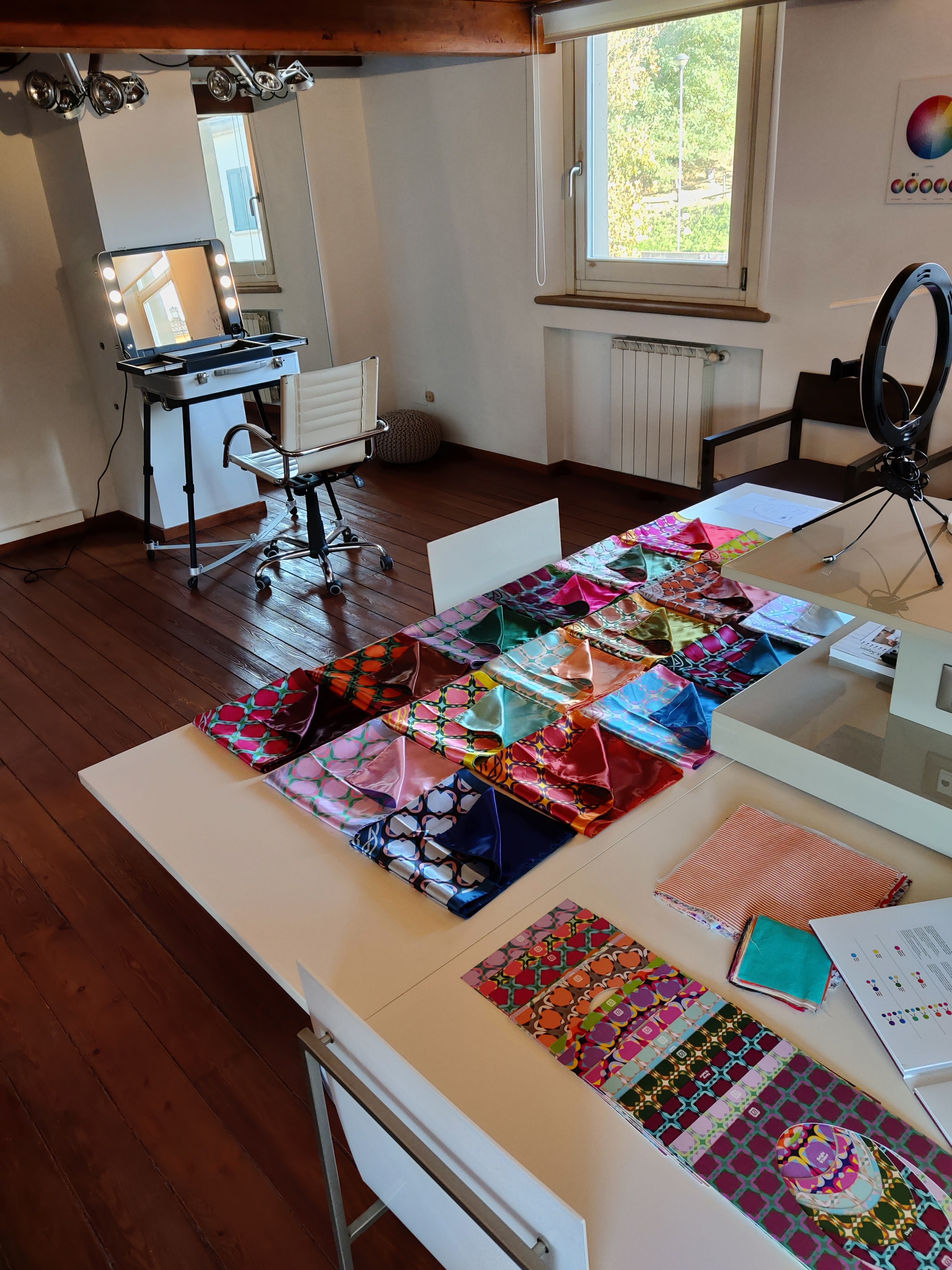
A look at the ideal combinations
Based on the information gathered in the questionnaire phase and the colours identified as bringing out the face, I present the ideal colour harmonies for private and/or professional life.
We then get to the heart of the communication goals, and I explain how combining colours lets you send very precise messages: colour is no longer judged on its own but placed within a context.
Delivering the palette
If the client has the colour analysis at my studio, lasting about an hour and a half, a few days later they'll receive a personalised book with their palette, the harmonies to favour based on the aspects mentioned above, and advice on hair colour and make-up.
They'll also find a description of their colour characteristics and the essential guidance for using the palette correctly.
After the consultation
With this new knowledge, the client will be able to choose which colours to wear independently and enjoy the personal and professional benefits of a more conscious image.
They can then consider adding other consultations to further improve their communication and make the most of their figure.
Colour analysis is just a small part of a wider journey that includes face analysis, body shape analysis, the style journey, wardrobe reorganisation and putting it all into practice with a shopping session.
The time factor
Taking several aspects into account, it may be worth having more than one analysis over the years: our colours change over time, as do our tastes, our expectations and our communication goals.
A change in working or personal life brings inner changes; so it would be wise to review your image according to your new needs.
For all these reasons you can better understand why there are no right colours, only the colours that flatter YOU and represent YOU NOW.
If you're curious to find out what they are, contact me by email at info@cgimagine.it.